
Project partnership
with NFBS Paris
Results
after redesign
Made in France
Accredited with official label
Summary
Ocean Clock is a French brand handcrafting marine instruments in Hossegor since 2015. With 115,000+ units sold across 250+ stores worldwide, they've been carried by Nature & Découvertes, exhibited at Maison & Objet, and featured in Elle. They're pioneers in transforming the tide clock, barometer, and thermometer into considered design objects.
Despite a decade of brand building, their website told a completely different story: a five-year-old platform that couldn't be updated without a developer, product pages that massively undersold what they made, and a customization experience that performed in ads but fell apart on site.
I partnered with them to reimagine their flagship store on Shopify from the ground up giving every product family its own visual world, rebuilding the customization experience with real-time feedback, and creating a modular system the team runs entirely on their own. For the first time, their online presence finally matches the brand they spent a decade building in the physical world.
what I worked on
strategy
information architecture
design
development QA
Ocean Clock was about to conclude a full decade spent building a solid brand as a genuine category leader. They grew from a single product to a full line, placed their handcrafted pieces in 250+ stores worldwide, landed a listing with Nature & Découvertes, exhibited at Maison & Objet in Paris, and earned coverage in Elle. Their physical shop in Hossegor was beautiful. The product, meticulous.
But their website? It told a completely different story.
For almost five years, the store had run on a custom store that was never designed to scale. It was built to sell tide clocks -- one product, one category. By the time Stéphanie and James reached out, they had barometers, thermometers, moon clocks, artist collaborations, a kids' range, and no clean way to present any of it on their website.
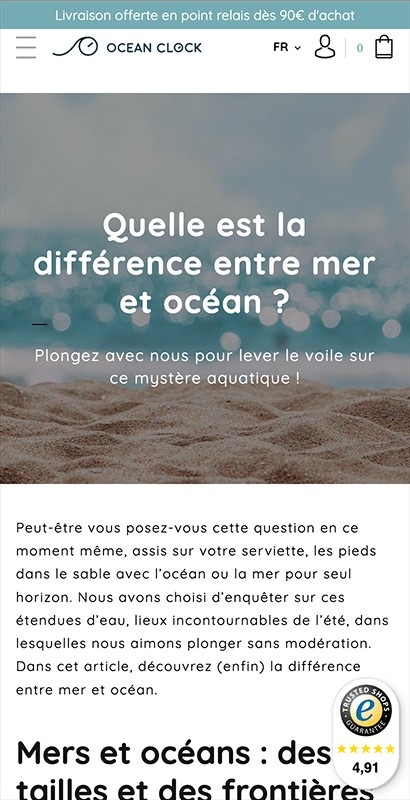
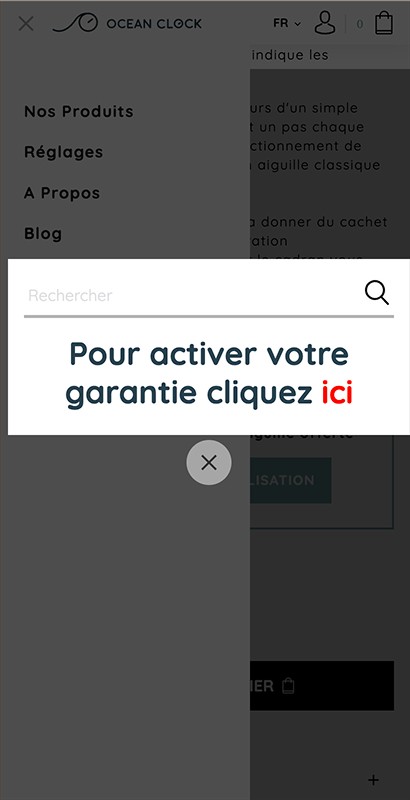
On their previous site, it was impossible for the team to update anything without calling a developer.
As customer feedback rolled in, they needed to make do with hacks to communicate important things: "to activate your warranty, click here”, in red, right under the search bar!
Along with their brand's success came a big problem: they started being copied by low-quality, cheaper companies trying to tap into their market share. Credibility and separation then became a real issue, since they now needed to meticulously make it clear that they were the legitimate brand who pioneered this category.
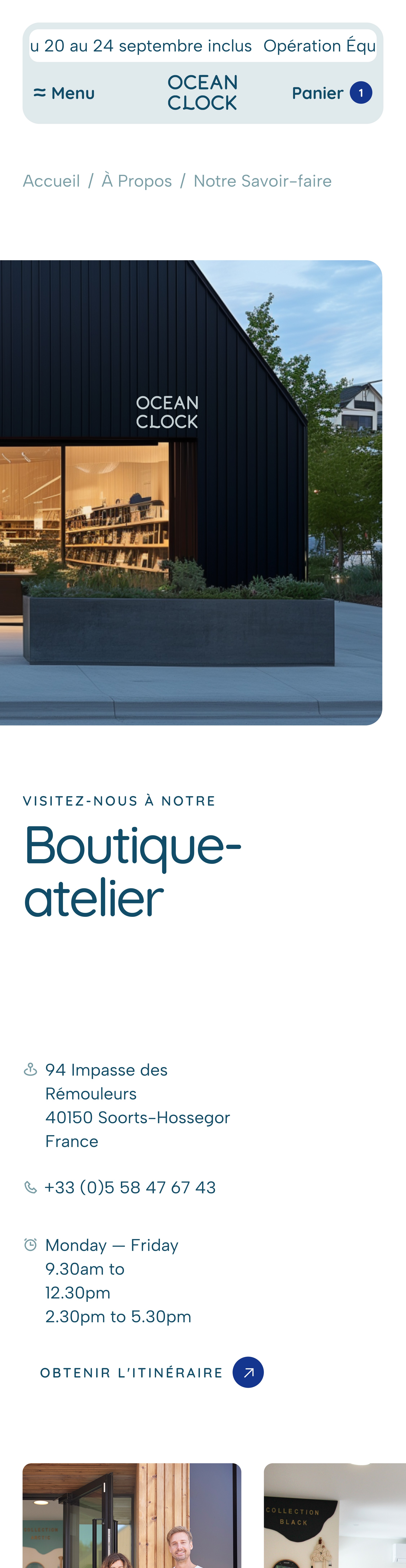
The home page had some brand storytelling, but was super text-heavy and not compelling. Their beautiful workshop, long-time team and impressive physical boutique did wonders to legitimize themselves in the physical world, but it all fell apart online.
The menu was confusing, hard to read and navigate, people couldn't find what they were looking for. In product pages, creating content about their hand crafted process, premium materials, etc was not doable, so the pages were short and massively underselling their beautifully made clocks and thermometers.
On the help & support side of things, they did a huge amount of work creating an FAQ system the way they could: by using an external form system. It was messy, involved, visually cheap and outdated, but that's what they managed without having to ask the developer to add it in.
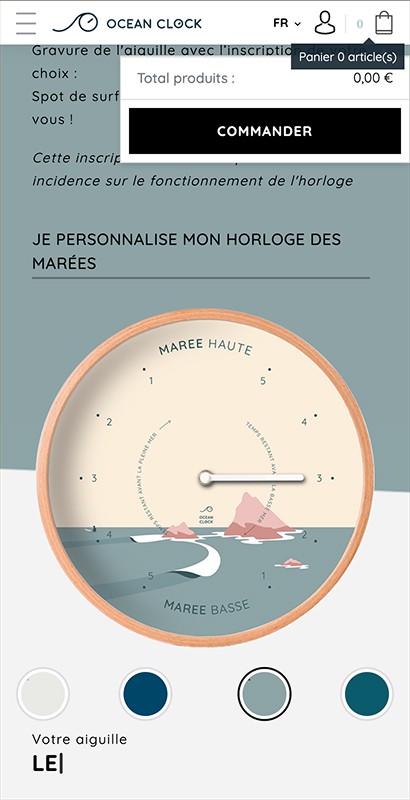
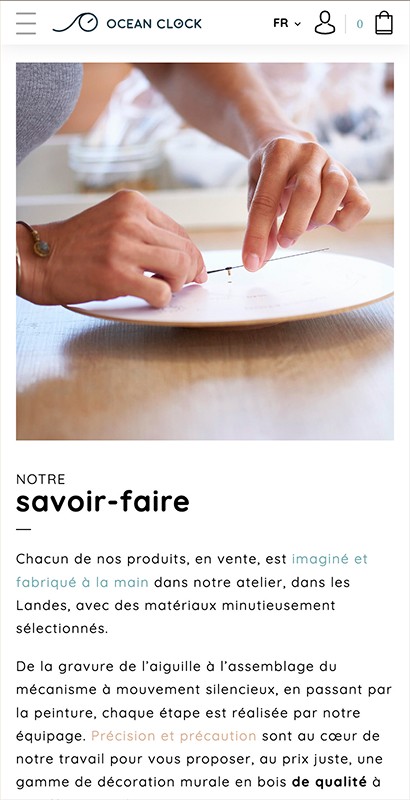
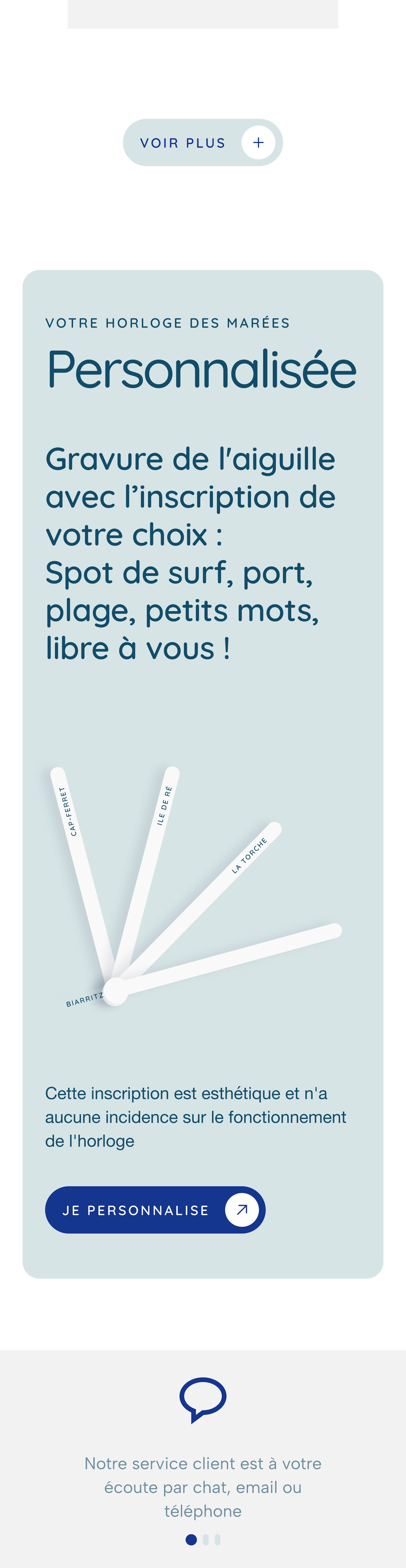
The idea of product customization was one of their strongest commercial hooks, and something that genuinely performed well in ads, but on the website it felt bootstrapped: a clunky, low-res, flow that felt outdated and undersold their biggest customer co-creation aspect.
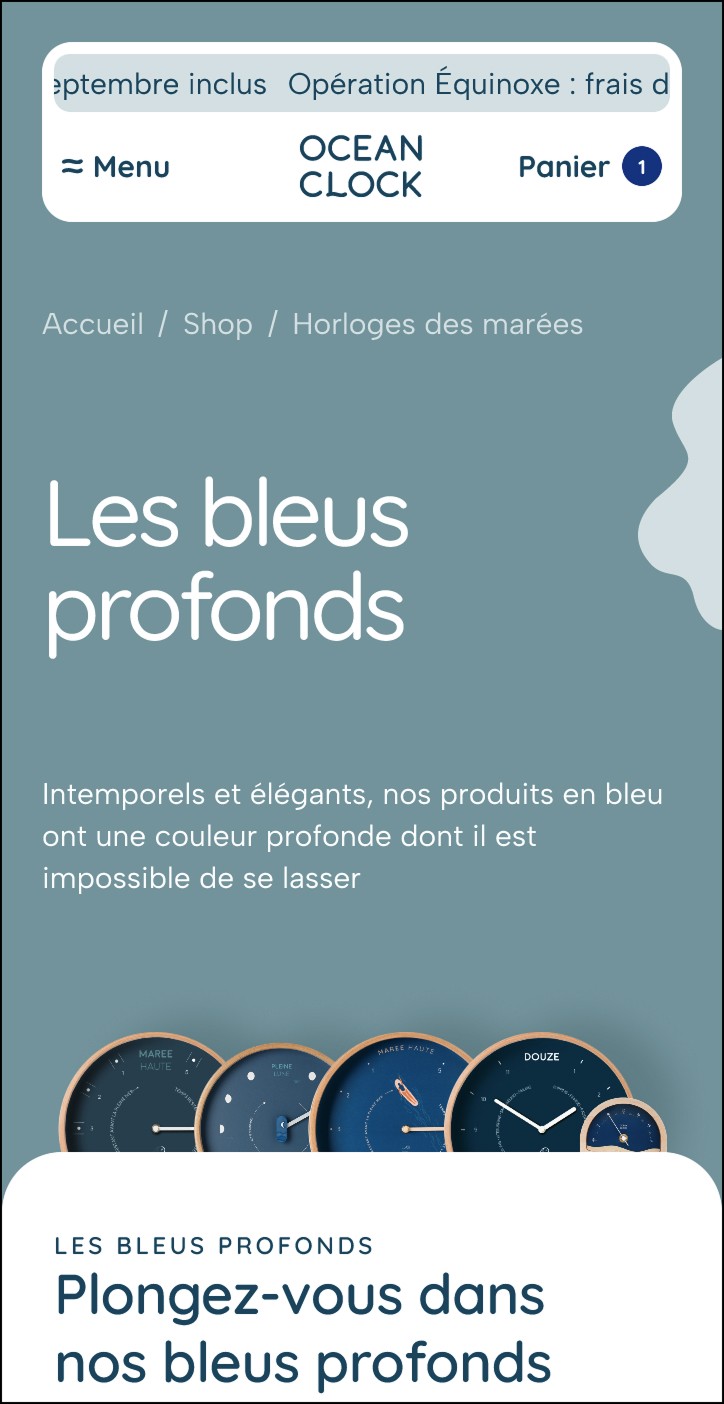
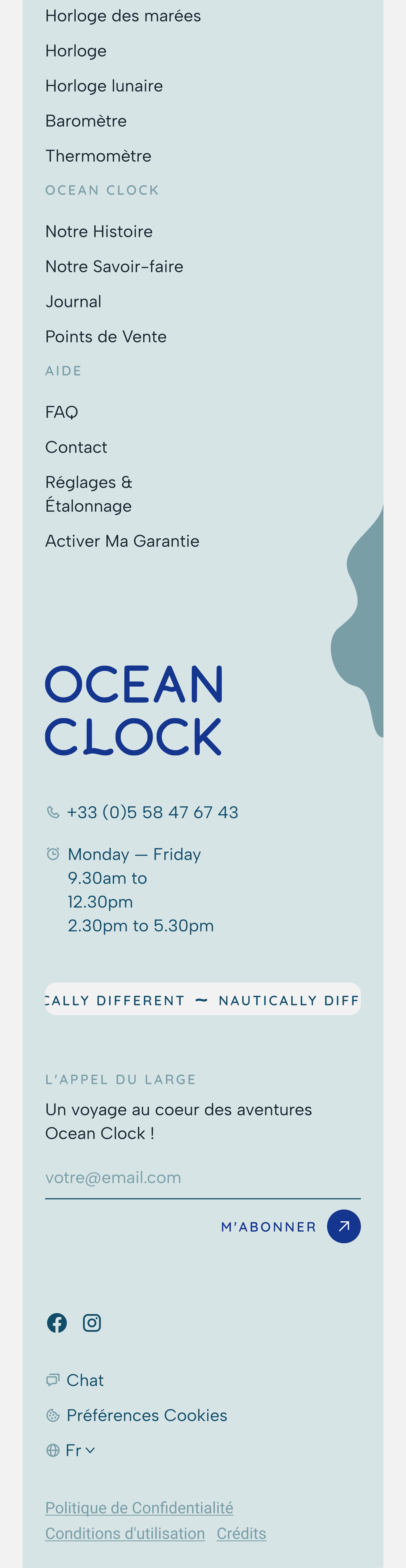
The navigation menu was restructured into a mega-menu system that had new categories/sunsetting ones in mind, built to scale with no limits, as much as they needed. In addition to the contextual links to the setting and calibration guides, I added a highlighted slot for artist collaborations which they run twice a year and had no good way to feature. Also a "help strip” making the warranty activation now much easier to find, grouped with the other help links.
What started as a demand for a redesign expanded naturally as the possibilities of a proper brand platform became clear, and everyone was excited to keep going until it felt just right.
There was a profound disconnect: a customer who discovered Ocean Clock at Fleux in Paris, or held one of their clocks at their beautiful physical boutique, would go online and find something that didn't match. The brand they had spent nearly a decade building had no proper home.



Before any design work, I dove deep into Ocean Clock's challenges with the founders, and the goals were clear:
grow online DTC revenue (55% of their sales at the time)
cement strategic positioning: increase trust and credibility to separate from copycats
focus on customizations → lever of growth, make it easy and fun
optimize operations as much as possible to support growth
This wasn't just a visual refresh problem. The old site was inflexible by design, a platform that had been bootstrapped and patched for years to accommodate a brand that had outgrown it.
The answer wasn't better colors on a broken foundation. We moved to Shopify and started from scratch. The core design challenge was scalability with coherence and autonomy, increasing trust and credibility, cementing their pioneer position in their market.
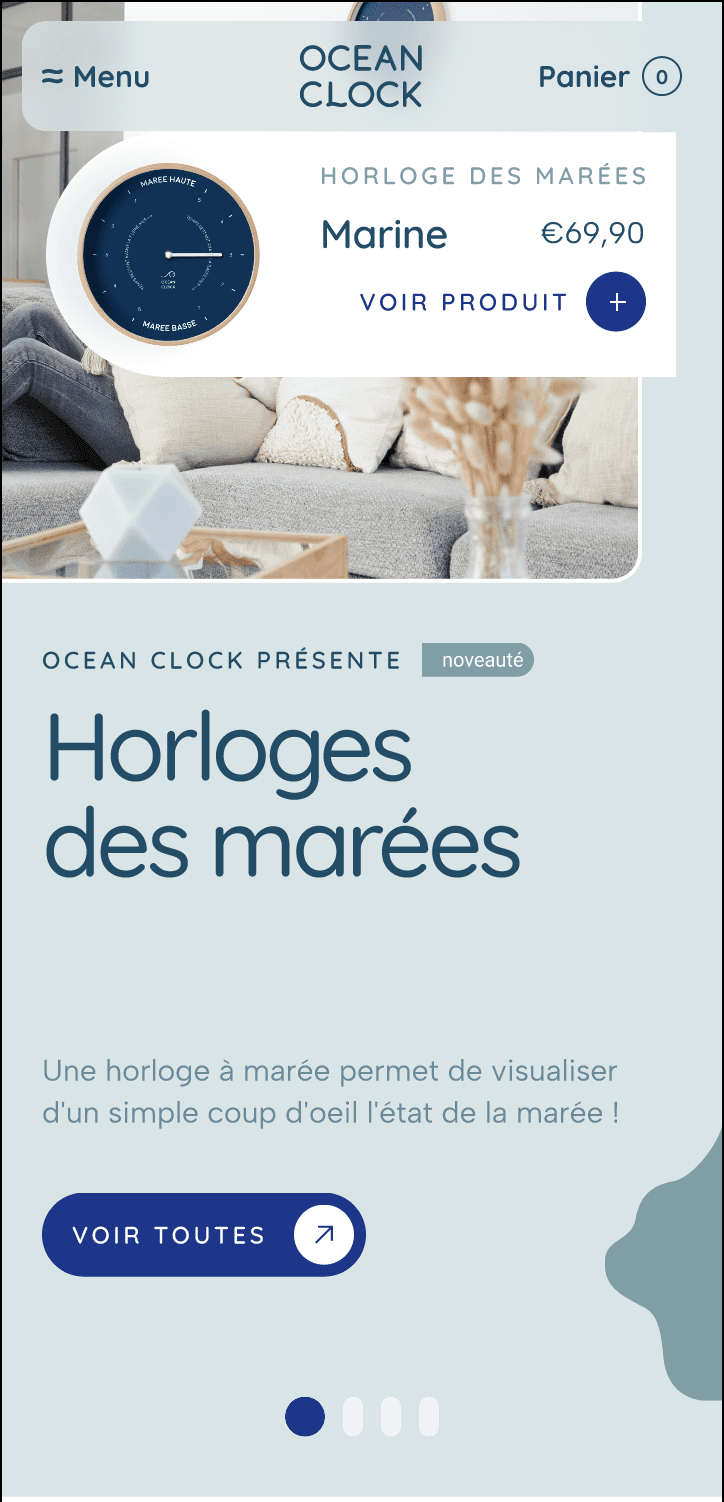
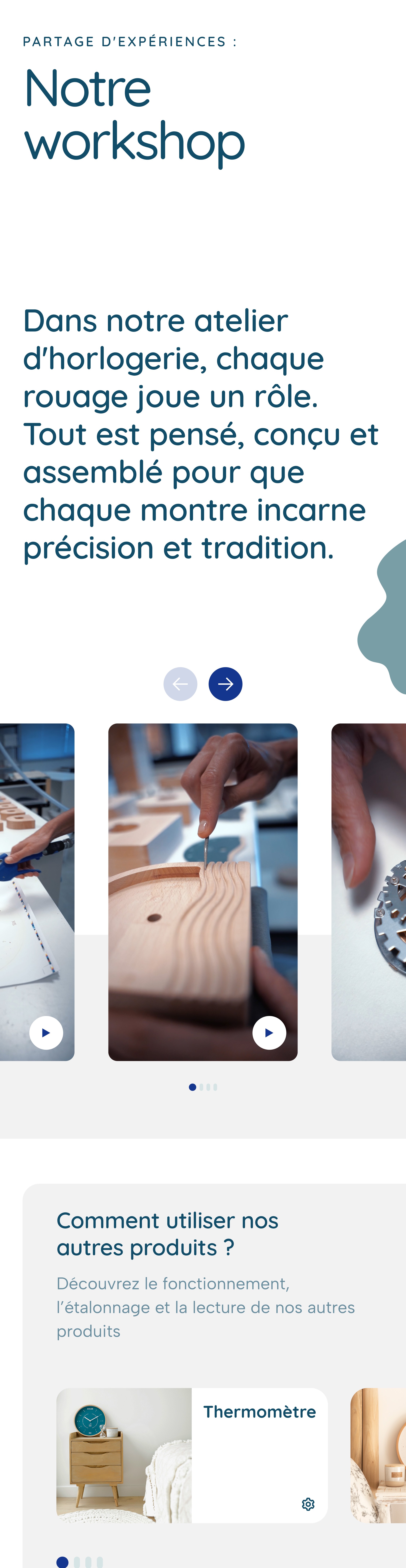
To tackle the credibility and trust issue, I had to make it clear that they had infrastructure, a workshop full of craftsmanship, a solid story built in the real world. I started expanding their visual identity by pulling the physical world into the digital one: the workshop, the people, the process, the weight of a real place that had been making these objects by hand since 2015. I also recreated the colorful shapes hand-drawn by one of the founders, coupled with other visual elements from the physical store and wove it all into the website's design system, connecting their digital and physical world to create a seamless experience.
I also made a point of highlighting the human side of the whole ecosystem, not only from the brand side but also from their customers. They had beautiful shots of their products sent by customers, so we made a place to showcase all of their spaces, inviting people to become a part of it.

Ocean Clock now had multiple product families, each available in several color ranges, each customizable with engraved text. The old site threw all of this at visitors without orientation.
To make it more appealing and easier to digest, my approach was to create color families with their own visual grouping: a distinct name and color theme, its own collection architecture, its own page experience, while keeping the brand reading as one unified world. Then, the product family pages and PDPs were designed to connect the products to each other, so a customer buying a tide clock would naturally understand what other products were part of the family in a visual way, making the purchase of matching items easier and much more intentional.
The personalization experience was completely rethought. The old flow was transactional and forgettable. The new one treats personalization as a feature worth showcasing: real-time visual feedback as you type, a lifestyle-led presentation rather than a technical form, and a dedicated homepage section that visually showcases it to invite customers to check it out. Given that customization was already performing well in their campaigns, making it feel as premium as the product itself was one of the highest-leverage decisions in the project.
The biggest flexibility was unlocked by a site-wide modular content blocks system I designed from scratch with their visual language, giving them the ability to mix and match and create whatever content they needed across the site without being scared of breaking the design, without a developer, for the first time.
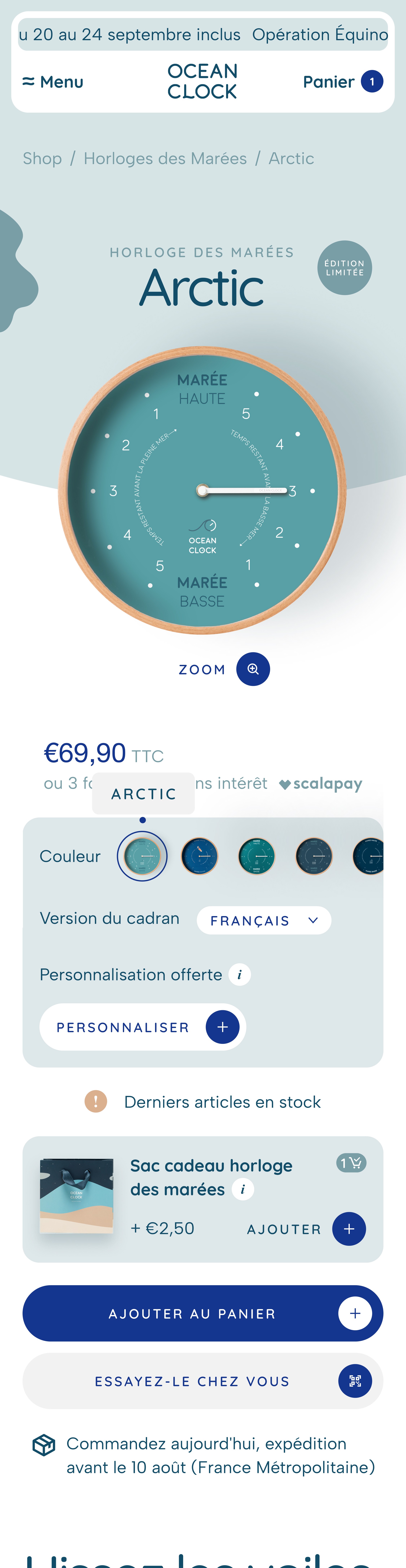
Where these blocks shine the most is on the product detail pages, where they could now add images, videos, text and interactive blocks to tell the story of each product however they pleased. My intention with this was to make creating new product lines no longer feel limiting, but instead feel fun for Ocean Clock, since each product could now have its own world in a very easily customizable way and also be tied to a color family across different lines.
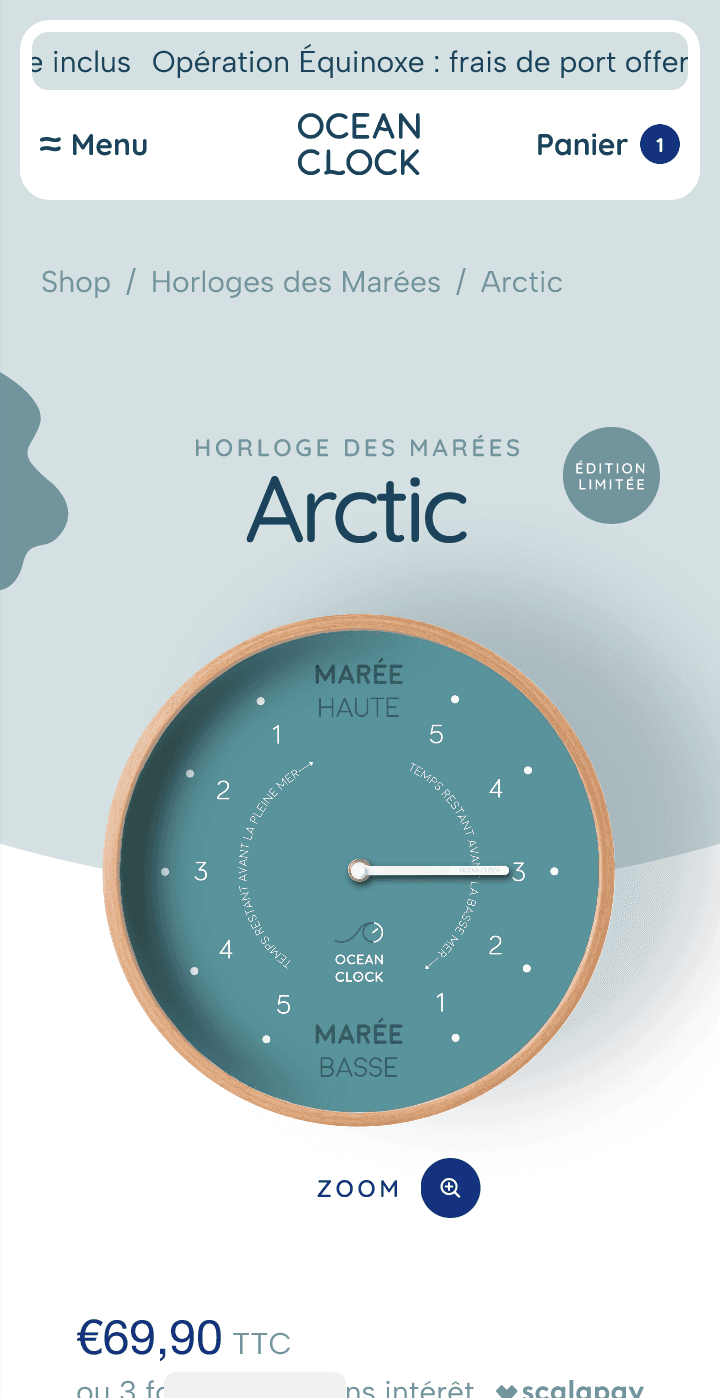
The visual impact on the product page was felt right away when it loaded: an interactive 3D model of the clock you could rotate around, and an AR visualization on mobile that allowed people to preview the product in their own space.
The page now felt alive, showing so many more lifestyle shots, visual color options, add-ons, and the continuation of the color theme per-product.
With the modular blocks, now they could write the page around how customers actually evaluate a handcrafted instrument: materials and process as content sections, not accordion items. Showing how to hang and read the clock, seeing the piece in their own space before buying. The pages went from short and underselling to genuinely telling the story of what makes these objects worth owning.
One thing that kept coming up in customer feedback was confusion around setup and calibration. Tide clocks require a specific setting process, and the existing guides were dense, hard to understand and looked outdated.
I designed a wiki-style documentation system: a modular template that aggregates how-it-works, settings, and calibration content into a single clean experience per product family, with sections that expand so customers aren't overwhelmed and can easily scan to read only what they need.
The template is reusable so that every new product line Ocean Clock launches can slot straight into the same system, easily managed and updated. It's tied directly into the navigation as its own dedicated area, and cross-linked from the shop menu with the same settings icon (visual pattern for settings site-wide), so the path from "I just bought this" to "I know how to use this" is never more than one click away.
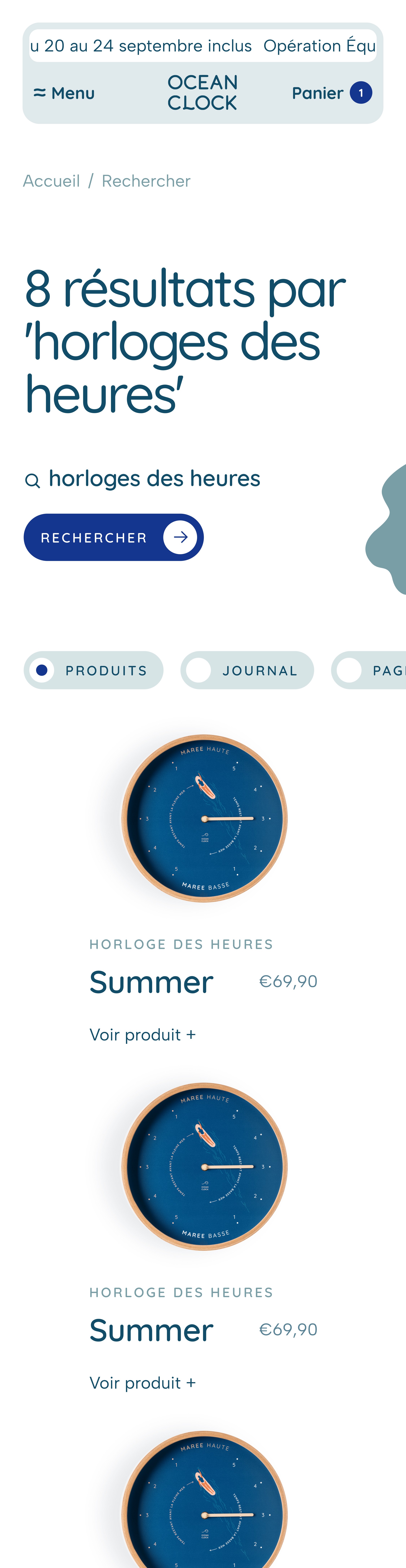
Operational overhead was quietly costing them time they didn't have. Between a site that required a developer to change, a warranty activation link hacked under the search bar, a search that only returned products, and an FAQ that only existed in French, the team was absorbing questions and friction that the site should have been handling on its own.
Moving to Shopify solved a layer of this at the foundation: product catalog management, inventory, and the possibility of integrations with their physical store systems all made everything significantly easier to handle without external help.
The new site addressed all of it: a fully editable navigation, a searchable knowledge base that returns products, pages, and articles, a bilingual FAQ built with modular blocks they can extend themselves, and a streamlined contact flow that routes requests properly before they become support tickets. The goal was to make the site work as hard for the team behind it as it does for the customers in front of it.


Ocean Clock now has a store that matches what they've spent a decade building. The team manages it themselves: updating product pages, adding content, launching new lines, without ever needing a developer. The modular system means every future product has a home ready for it before it even exists, and a way to slot right into product families to expand their possibilities.
The new store made the brand look like the scale it was growing into, not the scale it was at, setting them up for a completely new level over their next decade.


" height="66.9999999821279px" id="X8HbpzZKH" transform="translate(0 5.162)" width="1514px"/></svg>)